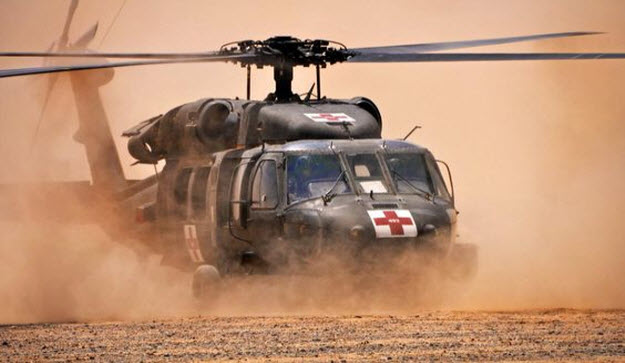
— Will The New Law Help Veterans Fly Faster?
In case you missed it, important news for veterans was announced this week.
The Veteran Emergency Medical Technician Act of 2016, was signed into law in late July.
The purpose of the new law is training for military medics transitioning to civilian careers. Trained military medics will now be put on an accelerated track to receive state EMS certification and licensure.

What does this mean in the real world?
Will this new law help veterans start flight medic careers faster? This article answers these questions.
Giving Credit Where Credit Is Due
Before I answer the questions, I want to give credit to the National Association of Emergency Medical Technicians (NAEMT). It’s no exaggeration to say the law would not exist if not for the efforts of NAEMT and its members.
According to NAEMT President Conrad “Chuck” Kearns, “The bill’s passage is a direct result of advocacy efforts by thousands of EMS professionals and other supporters of military-to-civilian transition programs. We applaud all who contributed to the bill’s passage by visiting their representatives, by sending emails and letters requesting congressional support, or by walking the halls of our nation’s Capitol during EMS On The Hill Day on April 20. Our efforts provided the momentum to achieve today’s victory, and honors the bravery and sacrifice of our military veterans.”
The bill was a key priority of NAEMT, who will help create the transition program for trained military medics to meet state EMT certification and licensure requirements.
What It Means In The Real World
How does the new law work in the real world? Will it help transitioning military medics become flight medics faster?
Yes and no.
A second important purpose of the law is to help fill the shortage of EMTs in the United States. I believe the law will help fulfill this need.
But it’s important to realize EMT and paramedic are two different certifications. The focus of the new law is EMT certification and licensure. There is no provision for paramedic certification.
In the real world, this means the law will help aspiring flight medics reach EMT certification faster, but that’s where the help ends. Other requirements for becoming a flight medic — paramedic certification, minimum of 3 years experience in critical care, etc, — are still the full responsibility of the flight medic candidate.
[divider style=”10″]
Want more EMS flight job tips and advice? Get The Net newsletter. Sign up here (it’s free):
[shortcode-variables slug=”optin-form”]