


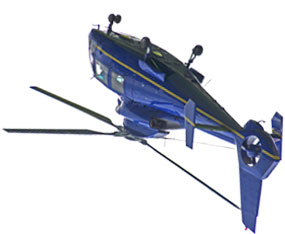
Is it just me? Or is the whole air ambulance industry flying upside down sometimes?
Every now and then we see or hear things that cause us to shake our heads in disbelief.
Like, what the heck is that about?

Don’t get me wrong, I love to fly and sincerely believe flying Emergency Medical Services (EMS) is one of the greatest jobs on the planet.
Unfortunately, loving what you do isn’t enough to guarantee your safety.
As human beings, we adapt by making our beliefs match our actions. Scientists call it cognitive consistency (which is just a fancy term to describe how we make sense of all the information we process every day).
The short summary version of cognitive consistency is that when our beliefs match our actions, our lives are simpler, easier and better.
And in today’s world of information overload, who can argue the value of that?
But here’s the catch:
Sometimes to simplify our lives we make ourselves believe things that aren’t really true.
Like it or not, we do it.
So every now and then it’s a good idea to step back and ask yourself if your beliefs still jive with reality. Or are you just kidding yourself about certain things?
We decided to step back and compare industry beliefs to flight crew safety. Some of our findings might surprise you.
Here’s the Flight Safety Network list of beliefs holding flight crews back from real safety:
Crippling Belief #1: Flying is the Best Option
Um….. no, it’s not. Or at least it’s not all the time. It’s usually the fastest option, but it’s not always the best option.
Does it make sense to fly a patient just because you can? Or just because a ground ambulance isn’t available right this second?
Does it make sense to make a patient wait 12 hours, 24 hours, or longer for helicopter availability? When you could transport by ground in three hours or less?
Think it never happens? Think again.
Crippling Belief #2: Patient Care is Priority One
Mess up safety and there is no patient care. Mess up safety bad enough and there is no patient or flight crew.
You have to find balance between the two without neglecting either. You can’t just decide one is more important than the other. It doesn’t work that way.
We sometimes see safety neglected in the spirit, or under the disguise, of providing better patient care.
Don’t do it. Don’t shortcut safety for any reason. You might get away with it once or twice, but you will not survive it forever.
Crippling Belief #3: Qualified Makes You Expert
Experienced EMS people know better. But….. not everyone is experienced. And most experienced EMSers gained their experience by surviving situations they really had no business being involved with.
Remember, just because you’re “signed off” as qualified on a procedure or piece of equipment, it doesn’t mean you’re an expert.
Until you really know what you’re doing, don’t write a check with your ego you might have to cash with your butt. Ask for help.
Check out our article How to be a Flight Safety Network Rock Star for ideas on how to step-up your EMS game.
Crippling Belief #4: Trending Data Helps Flight Crews Improve
Does your flight program track takeoff times? Does it keep records on time elapsed between dispatch time and liftoff time? Or how long crews spend on scene with a patient?
If it does, we’re guessing it’s only to identify trends to improve through training, right?
There’s no real pressure for flight crews, it’s just a way of trending data to help everyone improve.
In fact, there are no takeoff time limits, just takeoff goal times. Sound about right?
It even sounds believable when pitched by the right person or program.
The problem is that it’s a total crock. If you’re tracking data with the stated or implied intent of meeting a set time limit, you’re putting pressure on flight crews.
Pressure that directly results in lowering their overall safety.
Think of it like pregnant. Either you are or you’re not. There’s no maybe. If you’re trending flight data, you’re putting undue pressure on flight crews. No maybe.
Crippling Belief #5: Goggles Turn Night into Day
Night Vision Goggles rock. We absolutely love them.
But they do not turn night into day.
Goggles are a tool to accomplish EMS flights safer. Nothing more. Nothing less.
Used properly, they are fantastic. The key to using goggles safely is to remember their intended purpose. The FAA’s intent is for pilots and flight crew to only use goggles to assist them with cases they would have otherwise flown without goggles.
The idea is to never use goggles to fly cases you would have otherwise turned down.
We hope you consider re-evaluating your own safety beliefs from time to time. The men and women who fly EMS are an amazing group of people.
Creating an environment where they have the very best chance of returning to their families after each and every flight seems the least we can do for them.
Clear skies and tailwinds,
Fly-write
————————————
Interested in more tips about the air ambulance industry? Sign up for our Crew Glue Newsletter here.
